How to Use a Vernier Caliper for Accurate Measurements?
A Vernier Caliper is an essential tool for precise measurements in various fields. It allows users to measure internal and external dimensions accurately. Many people find it challenging to use a Vernier Caliper correctly. Understanding how to read this instrument can significantly improve measurement accuracy.
To begin, familiarizing oneself with the parts of the Vernier Caliper is crucial. The main scale and the sliding Vernier scale work together. Users often overlook the importance of observing the zero reading. A small mistake can lead to significant errors. This instrument requires patience and practice to master fully.
Using a Vernier Caliper can seem daunting at first. However, with careful handling and attention to detail, accurate measurements become attainable. It’s important to note that even experienced users can make mistakes when dealing with complex measurements. Regular practice and reflection on these experiences can lead to improved proficiency.
Understanding the Components of a Vernier Caliper
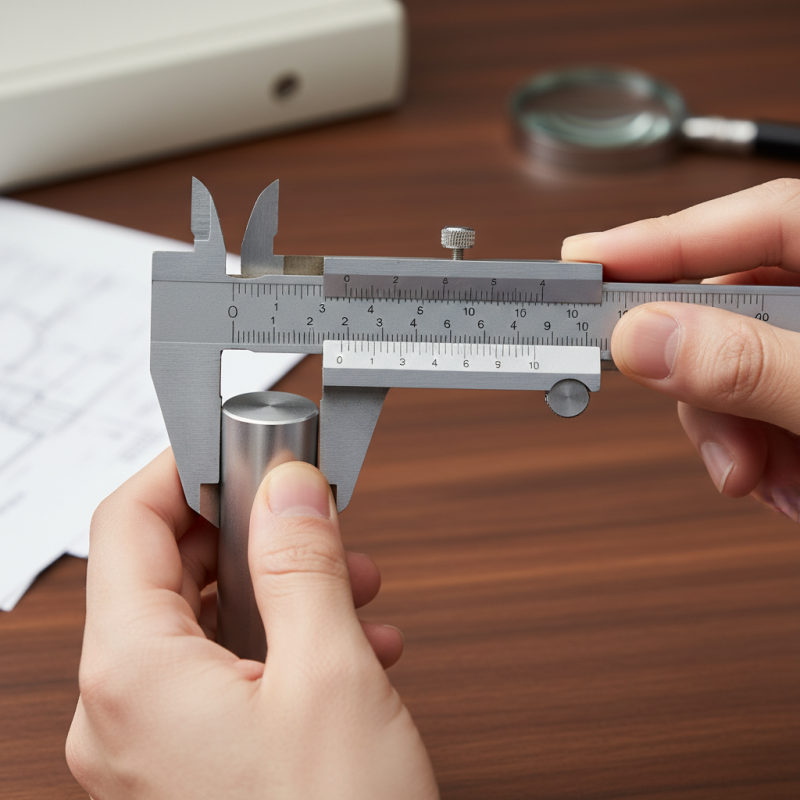
A vernier caliper is an essential tool in precision measurement. Understanding its components is crucial for obtaining accurate results. The main parts include the main scale, the sliding scale, the jaws, and the depth probe. Each part serves a specific function, enabling users to measure lengths, widths, and depths accurately.
The main scale is marked in millimeters or inches. The sliding scale, which is attached to the main scale, allows for fine adjustments. This enables users to read measurements with high precision, often down to 0.02 mm. According to industry reports, accurate measurements can greatly reduce manufacturing errors, leading to a cost savings of up to 10%.
**Tip:** Always ensure the caliper is clean before taking measurements. Dirt or debris can cause inaccuracies.
The jaws are used for measuring external dimensions, while the internal jaws are for internal measures. The depth probe extends from the base, helping in depth measurement. It is important to align the caliper properly for exact readings. Misalignment can lead to flawed results.
**Tip:** Practice using the caliper on sample objects to gain confidence. Familiarity is key to proficiency.
Finally, while using a vernier caliper is straightforward, errors can arise. Users may misread the scales or forget to zero the tool. Regular practice and attention to detail can improve measurement accuracy significantly.
Measurement Accuracy of a Vernier Caliper
This chart illustrates the accuracy of measurements taken using a Vernier caliper. The data represents the precision achieved in millimeters when measuring different dimensions.
Preparing the Vernier Caliper for Measurement
Preparing a Vernier caliper for measurement is a crucial first step. Start by checking the zero mark. Close the caliper jaws gently. The zero reading should align perfectly with the zero mark on the scale. A miscalibrated caliper can lead to significant measurement errors, sometimes exceeding 0.02 mm according to industry standards.
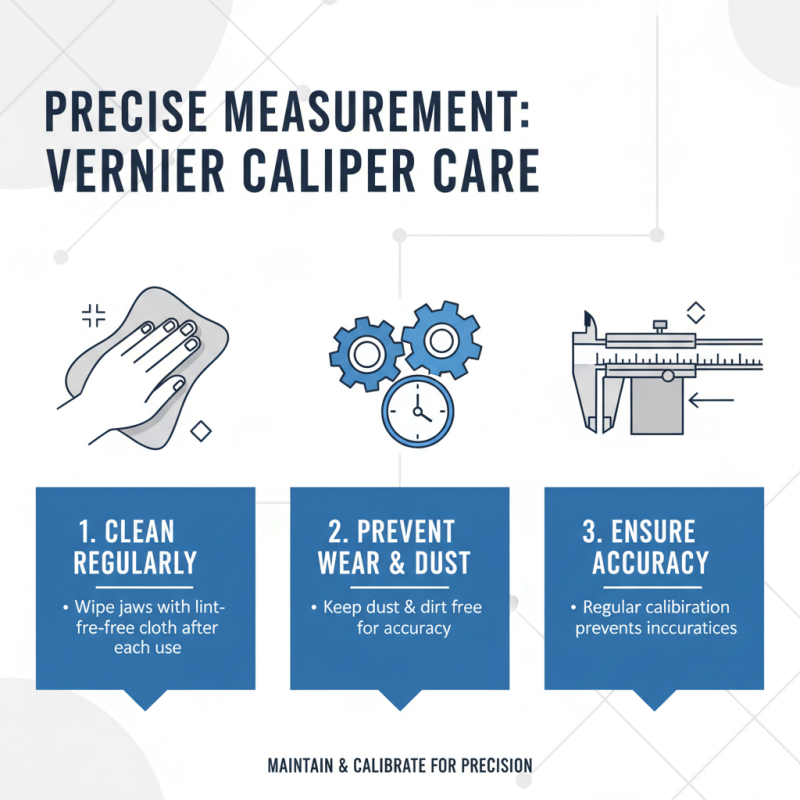
Next, clean the measuring surfaces. Dust and debris can interfere with accuracy. Use a soft cloth or brush. Regular maintenance prolongs the tool’s lifespan and ensures reliable readings. Inaccurate measurements can affect project outcomes. Reports indicate that up to 30% of measurement errors in precision engineering result from poor tool preparation.
Once calibrated and clean, position the object properly. Ensure that the caliper's jaws are perpendicular to the surface being measured. This alignment is vital. Measurements taken at an angle can introduce errors. A study indicated that such misalignments can lead to discrepancies of up to 0.5 mm, affecting overall quality control. Close observation during this step can make a difference.
Steps to Take Accurate Measurements with a Vernier Caliper
Using a vernier caliper can seem daunting, but mastering it leads to precise measurements. To start, ensure the caliper is clean. Dirt can impact reading accuracy. Align the jaws of the caliper with the object being measured. For external dimensions, use the larger jaws. For internal dimensions, switch to the smaller jaws.
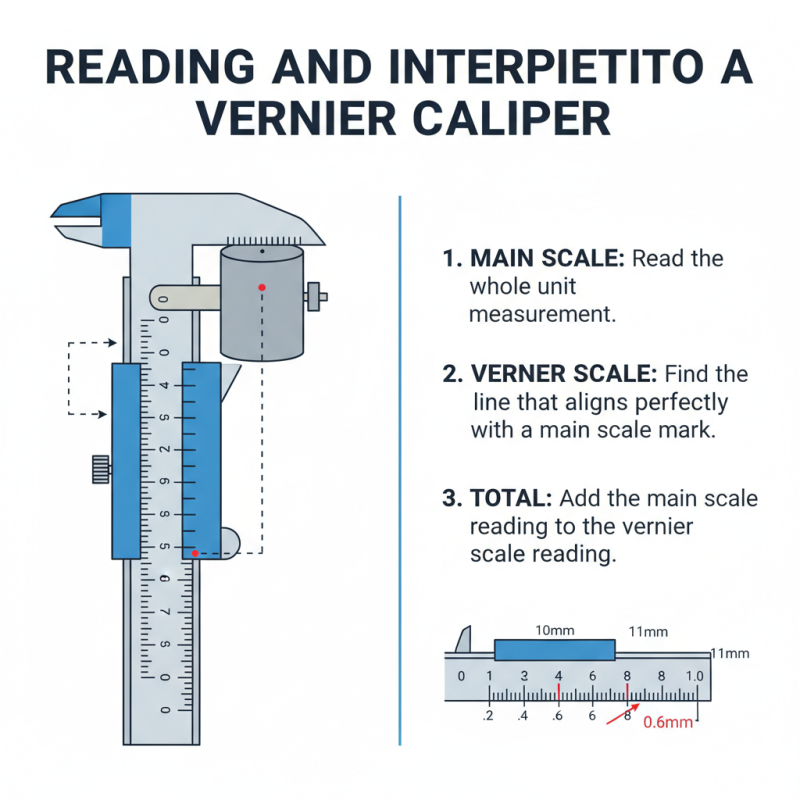
Next, read the main scale first. Then, locate the line on the sliding scale that aligns perfectly with the main scale. This method can achieve an accuracy of 0.02 mm, as noted in various industry reports on measurement tools. Familiarizing yourself with the tool will help avoid common mistakes.
It’s essential to keep the instrument at eye level while reading it. Misalignment can lead to errors. Regular calibration checks are advised to maintain accuracy over time. Studies show that even seasoned professionals make errors if they do not double-check their work. Analyzing these mistakes can improve future measurements. Learning from errors is part of mastery.
How to Use a Vernier Caliper for Accurate Measurements
| Measurement Type |
Measurement Value (mm) |
Remarks |
| Outer Diameter |
25.3 |
Measured with 0.02 mm precision |
| Inner Diameter |
15.0 |
Considered for fitting |
| Depth |
10.5 |
Used depth gauge for accuracy |
| Thickness |
5.2 |
Measured from multiple points |
Reading and Interpreting the Measurement Scale Correctly
When using a vernier caliper, reading the measurement scale accurately is crucial. The scale consists of two main parts: the main scale and the sliding vernier scale. The main scale provides whole units, while the vernier scale gives finer measurements. To interpret the measurement correctly, align the zero of the vernier scale with the main scale.
After alignment, identify where the lines on the vernier scale match the lines on the main scale. This step requires attention to detail. Sometimes, the correct reading can be missed due to a slight misalignment or a poor angle of view. Small errors can lead to significant inaccuracies, especially in tight tolerance scenarios.
It’s essential to note that environmental factors can also affect measurements. For example, temperature changes can cause expansion in the caliper itself. Take care to stabilize the tools before making your measurements. Regular practice will improve your accuracy over time. Yet, there may still be instances where your reading might not match the expected results. Reflecting on these inconsistencies can enhance your skills.