How to Choose Prototype Aluminum Casting Suppliers?
Choosing the right Prototype Aluminum Casting supplier can shape a project long before the first part arrives. A capable supplier should understand design intent, alloy behavior, mold preparation, machining, and inspection. They should also explain limitations without hiding behind impressive equipment lists.
John Campbell, a respected casting engineer and author, wrote, “Castings are made, not born.” This idea remains practical today. A prototype is not merely poured metal. It reflects gating design, melt temperature, venting, cooling control, and post-casting inspection. Ask suppliers how they manage porosity, shrinkage, wall thickness, and dimensional changes. Request sample inspection reports, material certificates, and photographs of comparable work. Evidence matters.
Look closely at communication. Can the supplier question a fragile rib or an unrealistic tolerance? Can they suggest a better alloy without dismissing your design? Strong suppliers often use simulation, coordinate measuring machines, X-ray inspection, or pressure testing when appropriate. Yet technology alone cannot guarantee success. Experience still appears in small details, such as clean parting lines and consistent surface finishing.
Prototype schedules also need honest discussion. A rushed sample may expose problems late. A cheaper quotation may exclude tooling adjustments, machining, or testing. That is easy to miss. It happened to many development teams, including experienced ones.
The best choice balances technical skill, traceable quality, realistic pricing, and responsive support. No supplier is perfect. The important question is whether they identify problems early and improve with you. This guide explains how to compare Prototype Aluminum Casting suppliers with practical, evidence-based criteria.
Define Your Prototype Aluminum Casting Requirements
Before comparing prototype aluminum casting suppliers, define what the part must prove. Record the alloy, quantity, end use, target weight, and test conditions. Include a clear drawing with datum references, wall thickness, draft, holes, threads, and machining allowances. State whether the prototype represents a production casting or only a visual mock-up. This distinction changes tooling, inspection, and finishing decisions.
The 2024 USGS Mineral Commodity Summaries reported about 70 million metric tons of global aluminum smelter output in 2023. That scale does not guarantee prototype consistency. Ask suppliers to explain alloy control, melt traceability, and heat-treatment records. ASTM B26/B26M and ISO 8062-3 offer useful references for casting quality and dimensional tolerances. Still, a tolerance copied from a catalog may not fit your function. Reflect on that. A supplier should challenge unclear requirements, not simply accept them.
Tips: Send a STEP file, a PDF drawing, and three critical dimensions. Request a sample inspection report, not only a quoted tolerance. Specify CT scanning or leak testing when hidden porosity could cause failure. Ask for lead time, revision control, and cosmetic defect limits. Leave room for revision; early prototypes often expose an assumption you missed.
How to Choose Prototype Aluminum Casting Suppliers?
Define Your Prototype Aluminum Casting Requirements
Typical minimum wall thickness varies by aluminum casting process. Use these engineering planning values to define your part geometry before comparing suppliers. Thinner walls may require tighter process control, specialized tooling, and stronger inspection capability.
When requesting quotations, also specify the aluminum alloy, prototype quantity, dimensional tolerances, surface finish, heat treatment, inspection documents, and required delivery date.
Compare Aluminum Casting Processes and Supplier Capabilities
How to Choose Prototype Aluminum Casting Suppliers?
Choosing a prototype aluminum casting supplier requires more than comparing hourly prices. The process must match the part’s geometry, alloy, quantity, and testing needs.
Sand casting suits complex shapes and low volumes, while permanent mold casting offers better surface finish and repeatability.
Die casting can deliver thin walls and high production speed, but tooling costs may weaken its value for early prototypes.
Investment casting can reproduce fine details, although dimensional control depends heavily on wax patterns and shell quality.
The International Aluminium Institute reported approximately 70.6 million tonnes of global aluminum production in 2023. This scale increases material availability, but it does not guarantee reliable castings. Ask suppliers for alloy certificates, melt-temperature records, recycled-content data, and traceability from furnace to shipment.
The U.S. Geological Survey’s Mineral Commodity Summaries 2024 also confirms aluminum’s broad industrial use, making supplier process discipline more important than simple material access.
Compare measurable capabilities. Request sample tolerances, porosity inspection methods, X-ray or CT options, and coordinate-measuring-machine reports.
A supplier using 3D-printed sand molds may reduce tooling time, while a conventional pattern can provide more stable repeat orders. In practice, quoted tolerance and achieved tolerance are different things.
Sometimes, painfully so. Review a previous casting section with visible ribs, bosses, and drilled holes. Check how the supplier handles machining allowance, distortion, and design changes.
A low quotation may hide expensive rework.
Another detail is often missed: packaging must prevent thin fins from bending during transport.
Evaluate Supplier Quality, Equipment, and Technical Expertise
Choosing a prototype aluminum casting supplier requires more than a low quotation. In prototype reviews, I examine sample parts under bright, angled light. This reveals pinholes, cold shuts, uneven machining, and sharp parting lines. Ask for inspection records, material certificates, and dimensional reports from comparable projects. A capable supplier explains acceptance limits before production begins. It prevents disputes.
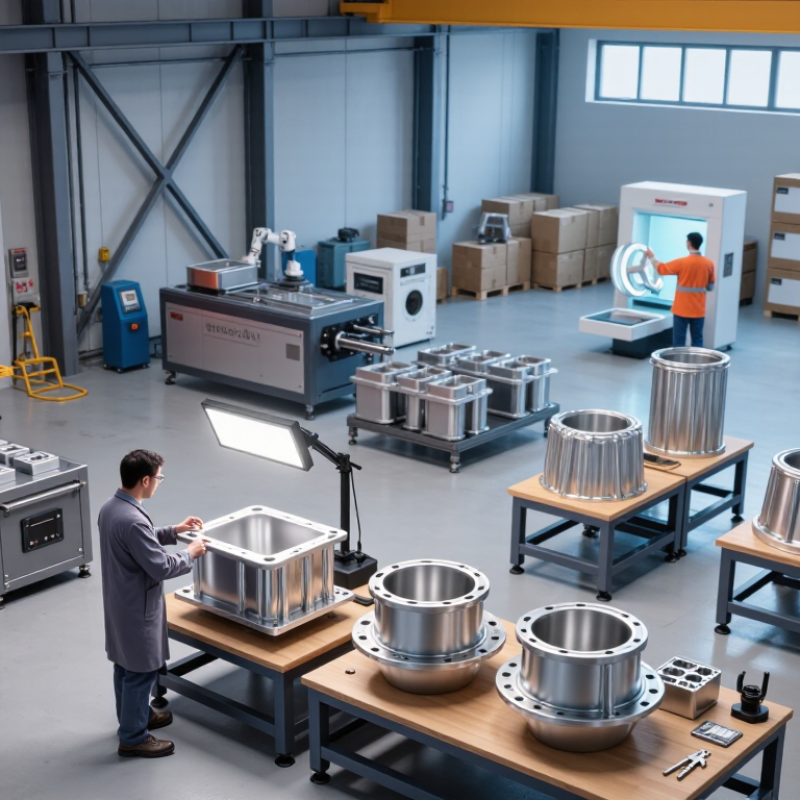
Equipment determines repeatability. Check furnace temperature controls, alloy tracking, mold-making methods, and post-casting heat treatment. For prototypes, flexible tooling can reduce lead time, but poor mold control may distort thin walls. Ask how the team measures melt temperature and removes gas before pouring. Their answer should include instruments, records, and trained operators, not vague promises. A coordinate measuring machine verifies critical dimensions, while X-ray or dye inspection may expose internal or surface flaws. Not every part needs every test. The inspection plan should match the part’s load, wall thickness, and risk.
Technical expertise becomes visible when drawings contain contradictions. An experienced engineer will flag draft angles, shrinkage allowance, machining stock, and inaccessible datums. I value questions that improve the design, even when they slow the quotation. One uncomfortable lesson remains: my early supplier comparisons relied too heavily on polished samples. The samples looked excellent. Production discipline mattered more. Request a pilot run, review nonconformance handling, and confirm who approves process changes. Reliable suppliers can show traceability from incoming alloy to final inspection without hiding defects or delays.
Review Prototyping Costs, Lead Times, and Production Flexibility
When choosing prototype aluminum casting suppliers, examine the full cost, not only the quoted piece price. A reliable quote separates tooling, pattern preparation, machining, finishing, inspection, and shipping. Ask whether setup fees are fixed or change with design revisions. Cheap is not always cheap. A lower casting price may hide expensive rework or weak dimensional control. Request a sample cost breakdown and compare identical alloy, tolerance, and surface requirements.
Lead time should include engineering review, tooling, casting, heat treatment, machining, and inspection. Ask for realistic dates at each stage. A supplier with documented quality checks can explain where delays usually occur. Ask for evidence. Review inspection reports, material certificates, and previous prototype records. Schedules can slip, especially when a casting needs several correction cycles. Building a small approval checkpoint before production may prevent a larger delay, although it can add a day or two.
Production flexibility matters when prototypes evolve. Confirm whether the supplier accepts low-volume batches and revised CAD files without restarting the entire process. Ask how they handle wall-thickness changes, added ribs, new machining points, or altered alloy requirements. Flexible suppliers should explain technical limits clearly, rather than promise everything. Communication quality is part of capability. A practical test is sending one drawing with a known challenge and measuring the response time, questions, and proposed solution. My own review would also note what remains uncertain; early assumptions about finish quality or delivery are often too optimistic.
Verify Communication, Certifications, and Customer Support
How to Choose Prototype Aluminum Casting Suppliers?
Communication should be tested before any purchase order. Send a drawing with one unclear tolerance and ask for clarification. A capable supplier should identify risks, suggest casting-friendly changes, and confirm inspection points in writing. The 2023 State of the Connected Customer report found that 88% of customers consider experience as important as products or services. For prototype work, response quality matters because a delayed question can stop machining, testing, and assembly.
Ask for evidence, not promises. ISO Survey 2023 recorded 1,265,216 valid ISO 9001 certificates across 189 countries and economies. Certification does not guarantee perfect castings, but it indicates a documented quality system. Request the certificate number, scope, issuing body, and expiration date. Also check whether the system covers casting, heat treatment, inspection, and subcontracted processes. A certificate limited to sales activities is weak evidence. Easy to miss.
Customer support should remain available after delivery. Ask who handles nonconformities, how quickly corrective actions begin, and whether dimensional reports include actual readings. During a factory review, look for labeled samples, calibrated gauges, and traceable material records. The 2024 Manufacturing Industry Outlook highlights supply-chain resilience and digital visibility as continuing priorities. A supplier that cannot share basic production updates may create unnecessary uncertainty. I would not judge support from one fast email alone; courteous replies can still hide poor ownership when defects appear.