Top Automotive Fixtures Tips for Global Buyers in 2026?
In the rapidly evolving automotive industry, the role of automotive fixtures cannot be overlooked. These specialized tools and equipment ensure precision and efficiency in manufacturing processes. As we approach 2026, global buyers must be well-informed about the latest trends and best practices in selecting automotive fixtures.
The market is becoming increasingly competitive. Understanding the technical specifications and material choices is essential for making informed decisions. Many manufacturers face challenges in balancing cost and quality. This concern often leads to mistakes that can affect production timelines and budgets.
Additionally, relying solely on conventional fixtures may not meet the growing demands for customization and innovation. Buyers must seek fixtures that enhance productivity while adhering to safety standards. Investing time in research can yield better long-term results. Adapting to changes is vital, but the journey is not always straightforward. Constant reflection and learning can help navigate this complex landscape effectively.
Key Factors Influencing Automotive Fixture Selection for Global Buyers
When selecting automotive fixtures, global buyers need to consider multiple factors. Quality and durability are paramount. Fixtures should withstand repeated use and the rigors of manufacturing environments. If a fixture fails, it can lead to costly production delays. Material selection plays a crucial role here, with options ranging from aluminum to high-density plastics, each offering different benefits.
It’s also essential to think about adaptability. The automotive industry evolves quickly, and so do designs. Fixtures must be flexible enough to accommodate new models or changes in manufacturing processes. Buyers should inquire about customization options. Long-term relationships with suppliers can yield better solutions tailored to specific needs.
Tip: Engage with suppliers on potential updates and improvements to your fixtures. Continuous dialogue fosters innovation. Another suggestion is to conduct thorough testing before regular implementation. This ensures efficiency and reliability.
Finally, the global market demands an understanding of regional trends. Buyers can gain insights by attending trade shows and industry conferences. Gathering firsthand experience can guide better decision-making in fixture selection. Keep these factors in mind to enhance operational efficiency.
Top Automotive Fixtures Tips for Global Buyers in 2026
Emerging Trends in Automotive Fixtures for 2026 and Beyond
The automotive fixture landscape is evolving rapidly. Buyers must pay attention to key emerging trends for 2026. One significant trend is the shift towards sustainable materials. Eco-friendly fixtures not only reduce carbon footprints but also meet growing consumer demand for sustainability in the automotive industry.
Another important aspect is the integration of smart technology. Advanced automation is redefining efficiency in fixtures. Manufacturers are investing in technologies that enhance precision and flexibility. However, integrating these innovations can be challenging. Many companies struggle with the initial costs and learning curves associated with new technologies.
Customization is becoming increasingly crucial. Buyers want fixtures tailored to specific needs. This trend highlights the importance of engaging with suppliers early in the design process. However, managing expectations can be a complex task. Balancing customization with timely delivery is an ongoing challenge for many buyers. Understanding these emerging trends will empower global buyers to make informed decisions in the evolving automotive market.
Top Automotive Fixtures Tips for Global Buyers in 2026 - Emerging Trends in Automotive Fixtures for 2026 and Beyond
| Trend |
Description |
Impact |
Expected Growth (%) |
| Automation Integration |
Utilization of robotic systems in fixture design for enhanced efficiency. |
Improves production speed and reduces labor costs. |
15% |
| Sustainable Materials |
Increased use of eco-friendly materials in fixture production. |
Supports environmental regulations and consumer demand for sustainability. |
20% |
| 3D Printing Technology |
Adoption of 3D printing for rapid prototype and fixture creation. |
Facilitates customization and quick iterations in design. |
25% |
| Digital Twins |
Utilizing digital twin technology for fixture performance simulation. |
Enhances predictive maintenance and optimizes production processes. |
30% |
| Smart Fixtures |
Integration of IoT in fixtures for real-time monitoring and data collection. |
Improves quality control and provides actionable insights. |
18% |
Cost Management Strategies for Buying Automotive Fixtures Globally
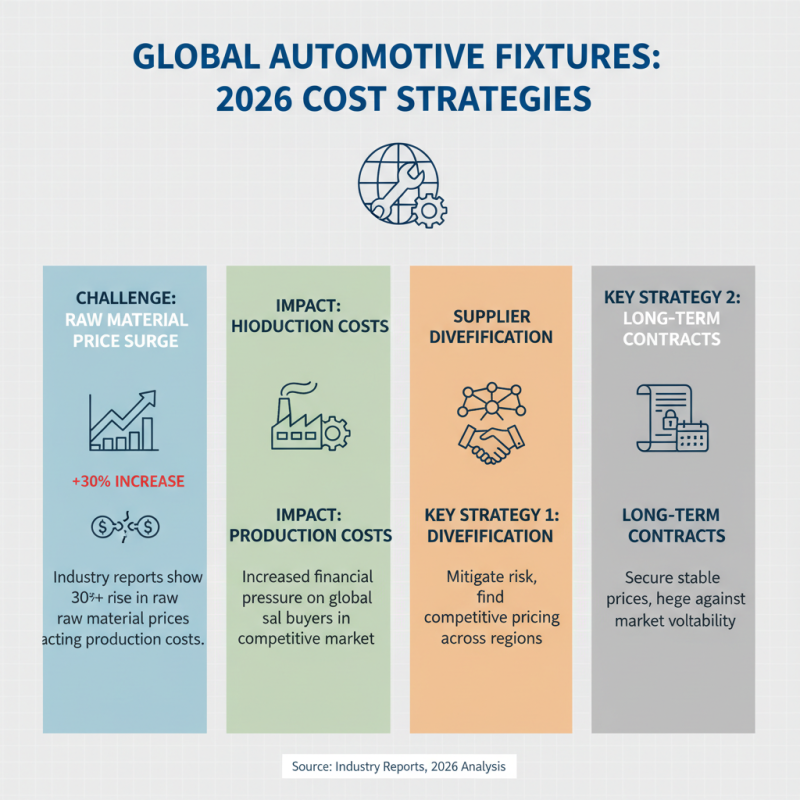
In 2026, global buyers of automotive fixtures face significant challenges. Cost management is crucial in this competitive market. According to industry reports, raw material prices have surged by over 30% in recent years. This rise influences overall production costs, urging buyers to adopt effective strategies.
One tactic involves bulk purchasing. By ordering in larger quantities, buyers can negotiate lower prices. Additionally, exploring alternative materials might yield cost savings without compromising quality. It’s essential to stay in tune with market trends and adjust purchasing strategies accordingly.
Another important strategy is to establish long-term relationships with suppliers. Trustworthy partners can provide price stability and consistent quality. Regular reviews and open communication can help in identifying potential cost-saving opportunities. Evaluating logistics costs can also lead to significant savings.
Buyers must remain flexible in their approach. The automotive fixture market is dynamic. Continually reassessing strategies based on market fluctuations is necessary. Embracing technology solutions can streamline procurement processes, potentially lowering costs. Ultimately, a proactive approach will aid in navigating the complexities of global sourcing in 2026.
Essential Quality Standards for Automotive Fixtures in International Markets
When considering automotive fixtures for international markets, quality standards play a crucial role. Buyers must ensure that their purchases meet essential safety and durability requirements. Understanding global certification standards can be complex. For example, various markets have distinct tests for material strength and fatigue. Buyers should familiarize themselves with these diverse requirements.
Additionally, effective communication with suppliers enhances quality assurance. It is vital to educate suppliers about specific needs and expectations. Some manufacturers might overlook critical details, leading to compliance failures. Regular audits and inspections can help identify these gaps. Buyers can request certifications and test reports to verify adherence to quality standards.
A focus on sustainable materials is also gaining traction. This trend poses challenges for buyers used to traditional materials. They may need to rethink their strategies and supply chains. Embracing innovation while ensuring compliance is key. The automotive industry is ever-evolving. Recognizing this shift will help buyers stay competitive in the global market while meeting consumer demand for quality and sustainability.
Sustainability Considerations for Automotive Fixtures in 2026
Sustainability is reshaping the automotive industry. When considering fixtures in 2026, it's essential to evaluate their environmental impact. From materials to manufacturing processes, every choice matters. Buyers should prioritize suppliers committed to sustainable practices. This commitment reduces waste and conserves resources.
Tips for selecting sustainable automotive fixtures include assessing material sources. Choose recyclable or biodegradable options. Look for suppliers with transparent supply chains. They should openly share their sustainability practices. Evaluate the lifecycle of the fixtures. Long-lasting products often mean less waste in the long run.
Collaborating with manufacturers that integrate sustainable technologies is crucial. Many are adopting eco-friendly alternatives. Consider innovations that minimize carbon footprints. However, ensure these claims are backed by data. Trust but verify—seek third-party certifications to validate claims. This adds an extra layer of reliability to your purchasing decisions.